Basics of Crypto Trading: A Beginner’s Guide
Understanding the basics of crypto trading is the first step toward making smarter financial decisions in the digital asset space. You’ve probably seen the screenshots of massive gains, the Twitter threads about 10x returns, and the ads promising financial freedom. Here’s the honest version: crypto trading is risky, most beginners lose money when they start actively trading, and the basics matter a lot more than people admit.
This guide covers the basics of crypto trading without the hype — what it actually is, key terms you need to know, how to read a chart, and what strategies actually make sense for most beginners. If you’re learning how to trade cryptocurrency, start here.
What Is Crypto Trading? The Basics of Crypto Trading Explained
Before anything else, understand the difference between trading and investing — because they’re not the same thing, and most beginners conflate them.
- Trading means buying and selling cryptocurrency to profit from short-term price movements. You might hold a coin for hours, days, or weeks — then sell when the price rises (or cut your losses when it falls).
- Investing means buying and holding for the long term, typically using strategies like dollar-cost averaging (DCA) — putting in a fixed amount regularly regardless of price.
For most beginners, investing beats trading. Active trading requires time, discipline, and experience. Studies consistently show that the majority of retail traders underperform a simple buy-and-hold strategy. That’s not to say trading is impossible to learn — but go in with realistic expectations.
Key Terms Every Beginner Should Know
When you’re learning the basics of crypto trading, the jargon is one of the first walls you hit. Here are the core terms:
- Spot trading: Buying or selling crypto at the current market price. If Bitcoin is trading at $65,000 and you buy 0.01 BTC, you own that Bitcoin right now. Simple, direct.
- Market order: An order to buy or sell immediately at whatever the current price is. Fast, but you may get a slightly worse price in volatile conditions.
- Limit order: An order to buy or sell only at a specific price you set. You control the price, but it may not fill if the market doesn’t reach your target.
- Bull market: A sustained upward trend in prices. When crypto is generally going up, it’s a bull market.
- Bear market: A sustained downward trend. When prices are falling broadly, that’s a bear market. These can last months or years in crypto.
- Volatility: How much and how quickly a price moves. Crypto is extremely volatile — Bitcoin can drop 10% in a day. This creates opportunity, but also serious risk.
- Liquidity: How easily you can buy or sell without affecting the price. Bitcoin and Ethereum have high liquidity — small altcoins often don’t, meaning large trades can move the market against you.
- Portfolio / position: Your portfolio is your total crypto holdings. A position is a specific trade you have open — for example, “I have a long position in ETH” means you’ve bought ETH and are waiting for the price to rise.
- Stop-loss: An automatic sell order that triggers if the price drops to a certain level. It limits how much you can lose on a single trade. Using stop-losses is one of the most important habits in risk management.
Types of Crypto Trades
The basics of crypto trading include knowing the different trade types you’ll encounter. Not all crypto trades work the same way — here are the main ones:
Spot Trading
The most straightforward type. You buy crypto at the current price and own it outright. You profit if the price goes up, lose if it goes down. No leverage, no complexity. Best starting point for beginners.
Day Trading
Buying and selling within the same day, sometimes multiple times. Day trading in crypto is extremely high-risk. You’re competing against algorithms, professional traders, and people who do this full-time. Not recommended for most beginners. The transaction costs and emotional toll alone are enough to wipe out inexperienced traders.
Swing Trading
Holding a position for days or weeks, trying to capture a price “swing” — buying during a dip and selling when the price recovers or peaks. Less intense than day trading, but still requires chart reading skills and emotional discipline.
Dollar-Cost Averaging (DCA)
Technically an investing strategy, not active trading — but it’s worth understanding alongside the others. DCA means buying a fixed dollar amount of crypto on a regular schedule (weekly, monthly) regardless of price. It removes the guesswork of timing the market and tends to outperform most active strategies for long-term holders.
Want to see what DCA could look like for you? Try our free DCA Calculator to model consistent monthly investing into Bitcoin or Ethereum.
How to Read a Crypto Price Chart (Basics)
Charts are the language of trading. You don’t need to master every indicator — but you do need to understand the basics.
Candlestick Charts
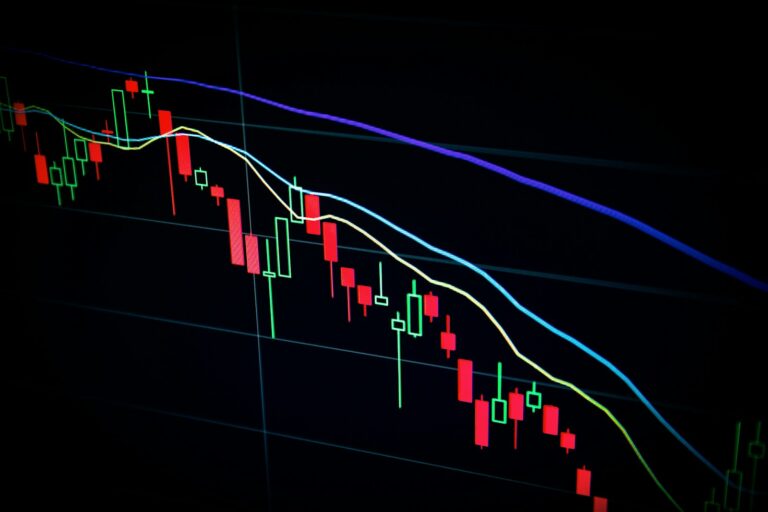
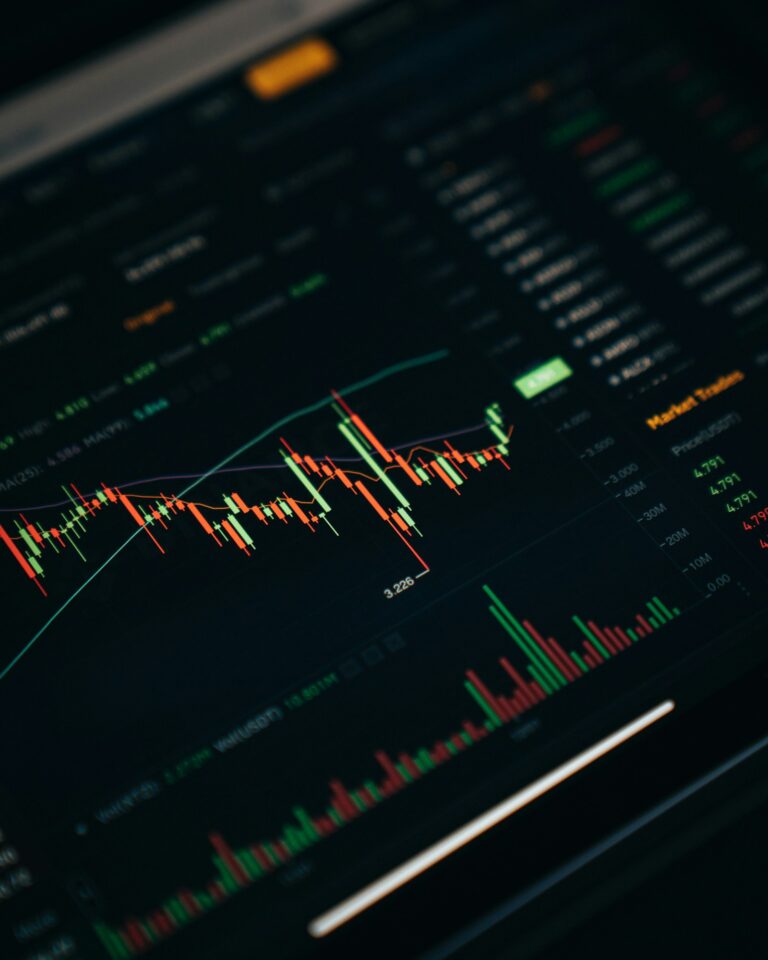
Most crypto exchanges display candlestick charts. Each “candle” represents price action over a set time period (1 hour, 1 day, etc.).
- Green candle: Price went up during that period (closed higher than it opened)
- Red candle: Price went down (closed lower than it opened)
- Each candle shows four data points: open, close, high, and low
Trend Lines
- Uptrend: Price making higher highs and higher lows — market momentum is positive
- Downtrend: Price making lower highs and lower lows — selling pressure is dominant
- Sideways: Price moving within a range, no clear direction — sometimes called consolidation
Volume
Volume shows how much of a crypto was traded in a given period. High volume on a price move means more conviction — more buyers or sellers participated. A price spike on low volume is less reliable than one backed by heavy trading activity.
That’s enough to start. Resist the urge to pile on RSI, MACD, Bollinger Bands, and five other indicators right away. Most beginner traders lose money from overcomplicating their charts, not from having too few indicators.
Simple Strategies for Beginners
Here’s what actually works for most people who are just getting to grips with the basics of crypto trading:
1. DCA Into BTC or ETH
The most boring strategy is also the most reliable for beginners. Pick Bitcoin, Ethereum, or both. Set up a recurring buy — $25, $50, $100 per week or month. Don’t look at the price every day. Let it ride over years, not weeks.
Use our DCA Calculator to see how this plays out over different time horizons and investment amounts.
2. Buy and Hold (HODLing)
Similar to DCA but simpler: buy a position in BTC or ETH, then hold it. Don’t try to time tops and bottoms. Don’t panic sell during crashes. This approach has historically outperformed most active trading strategies over multi-year periods — though past performance is never a guarantee.
3. Swing Trading (For the More Adventurous)
Once you understand chart basics and have been watching markets for a few months, swing trading becomes a possibility. The core idea: buy during a confirmed dip (price pulling back within an uptrend), then sell when price reaches a resistance level. Start with very small position sizes. Practice identifying trends before you put real money on the line.
Risk Management: The Part Most Beginners Skip
One of the most important aspects of the basics of crypto trading is risk management — and it’s the section most beginner guides bury or gloss over. Don’t skip it.
- Never invest more than you can afford to lose. This isn’t a disclaimer — it’s literally true. Crypto can drop 80% and stay down for years. If losing your entire position would cause you real financial hardship, you’re investing too much.
- Diversify. Don’t put everything into one coin, especially a speculative altcoin. BTC and ETH carry risk; small caps carry far more.
- Use stop-losses. If you’re actively trading, set a stop-loss on every position. Decide in advance how much you’re willing to lose on a trade (5%? 10%?), and set the stop before emotions get involved.
- Don’t trade on emotion. FOMO (Fear Of Missing Out) causes people to buy tops. Panic selling locks in losses at the bottom. The market is engineered to exploit emotional reactions. Write down your plan before you enter a trade, and stick to it.
- Keep records for taxes. Every crypto trade is a taxable event in the US. You’ll need records of what you bought, when, at what price, and what you sold it for. Use a tool like Koinly or CoinTracker, or keep a simple spreadsheet. Don’t discover this at tax time.
How to Get Started (Your First Trade)
Ready to put the basics of crypto trading into practice? Here’s a practical starting path without blowing your budget:
- Choose a reputable exchange. Look for one with strong security, low fees, and a clean interface. Bitunix is a solid option for beginners — straightforward onboarding and a good selection of trading pairs.
- Start small. $25–$100 is enough to get started and learn without serious consequences. Your first trades are tuition.
- Practice reading charts first. Spend a week or two watching price action without placing trades. Get comfortable with candlesticks and trends before real money is involved.
- Consider starting with DCA. Before jumping into active trading, run a few months of DCA on BTC or ETH. It builds exposure, teaches you how price moves feel, and may perform better than you expect.
- Secure your account. Enable two-factor authentication immediately. Never share your credentials. Consider moving larger holdings to a hardware wallet if you accumulate significant amounts.
Ready to get started? Start trading on Bitunix — it’s one of the cleaner platforms for beginners who want to keep things simple.
💡 New to crypto? Start here:
Before jumping into trading, most beginners do better with a simple DCA strategy — investing a fixed amount each month regardless of price.
Try our DCA Calculator → to see what consistent monthly investing could look like for you.
FAQ
Can I make money trading crypto?
Honestly? Some people do. But studies on retail traders consistently show that the majority of active traders lose money, especially in the short term. Mastering the basics of crypto trading — risk management, chart reading, and emotional discipline — gives you a better shot, but there are no guarantees. The people who tend to come out ahead are either highly skilled, got lucky on timing, or invested early and held. DCA investing has a more reliable track record for ordinary people than active trading.
How much money do I need to start?
$25 is enough on most exchanges. Many platforms allow fractional purchases, so you don’t need to buy a whole Bitcoin. Start small, learn the mechanics, and scale up only once you’re comfortable.
What’s the safest crypto for beginners to trade?
Bitcoin (BTC) and Ethereum (ETH) are the most sensible starting points. They’re the most liquid, have the most trading data behind them, and are less susceptible to manipulation than smaller altcoins. “Safer” is relative in crypto — both can still drop significantly — but they’re your lowest-risk entry points.
Do I need to report crypto trades on my taxes?
Yes. In the United States, every crypto trade — including swapping one coin for another — is a taxable event. You’re responsible for tracking your cost basis and reporting gains or losses. Consult a tax professional who understands crypto, or use dedicated crypto tax software. Ignoring this is not a viable strategy.
What’s the difference between a market order and a limit order?
A market order executes immediately at the current price — fast, but you take whatever price the market gives you. A limit order only executes if the price hits your specified target — you control the price, but it may never fill if the market doesn’t reach your level. For most beginner trades, limit orders are better because they give you more control over your entry and exit prices.
You can look up any crypto term and check live market data for free on CoinGecko’s crypto glossary. It is one of the most trusted sources for crypto market data.