
Best Crypto Trading Strategies for Beginners (That Actually Work)
This guide covers the most useful crypto trading strategies for beginners – simple, practical, and honest about the risks. Most beginner crypto traders lose money. Not because crypto is impossible to trade profitably, but because they start with the wrong strategies. This guide covers approaches that are actually beginner-appropriate: lower risk, easier to execute, and proven over time. Read these before you put any money into crypto.
Crypto Trading Strategies for Beginners: Start With These
Strategy 1: Buy and Hold (HODL)
Difficulty: Beginner | Risk: Medium
HODL started as a typo in a 2013 Bitcoin forum post where someone wrote “I am HODLing” instead of “holding.” The crypto community adopted it as an acronym for Hold On for Dear Life. It stuck because the strategy actually works.
What it means: Buy Bitcoin and/or Ethereum. Store it securely. Do not sell when prices drop. Do not sell when everyone is panicking. Hold for years, not weeks. No technical analysis required. No daily monitoring. Just conviction and patience.
How to execute it: Open an account on a reputable exchange. Buy Bitcoin or Ethereum. Transfer it to a hardware wallet for safe keeping if the amount is significant. Set a minimum holding period of three to five years in your mind. Ignore short-term price noise.
Risk profile: Medium. Bitcoin and Ethereum have dropped 60 to 80% from their peaks multiple times. If you buy and the price drops 50%, you must be willing to hold through it. The psychological challenge is the hardest part. Most people who “lost money” in crypto actually sold during a dip instead of holding through it.
Simple example: Someone who bought $1,000 of Bitcoin in January 2020 and held through the COVID crash of 70%, through the 2021 peak, and through the 2022 crash, would have had roughly $3,000 to $5,000 by early 2024. Someone who sold during the COVID crash locked in a loss and missed the recovery entirely.
Best for: Investors who believe in crypto’s long-term value but do not want to trade actively.
Strategy 2: Dollar-Cost Averaging (DCA) Into Crypto
Difficulty: Beginner | Risk: Medium
Instead of buying a lump sum and hoping you picked a good entry price, you invest a fixed amount on a regular schedule regardless of price. This is called dollar-cost averaging, or DCA.
How it works: You invest $50 every week, no matter what Bitcoin’s price is. When prices are low, $50 buys more Bitcoin. When prices are high, $50 buys less. Over time, your average purchase price smooths out. You stop worrying about timing the market because you are removing that pressure entirely.
How to set it up: Most major exchanges like Coinbase, Kraken, and others offer recurring buy features. Set your amount, set your frequency (weekly is common), and let it run automatically. You do not have to think about it after that.
Which assets to DCA into: Bitcoin and Ethereum are the most appropriate choices for beginners. They have the longest track records and the deepest liquidity. Avoid DCA-ing into small or obscure coins. Stick to the assets with proven staying power.
Risk profile: Medium. You still face significant losses if prices drop and you stop contributing out of fear. The strategy only works if you keep buying during down markets too. That is the discipline it requires.
Simple example: $100 per month into Bitcoin from January 2019 through December 2022 would have cost $4,800 total. Despite the 2022 crash, the position would have still been worth significantly more due to the gains accumulated during 2020 and 2021. Check our free DCA Calculator to see how different contribution schedules perform historically.
Best for: Beginners who want exposure to crypto without stressing about timing.
Strategy 3: Trend Following
Difficulty: Intermediate Beginner | Risk: Medium-High
Trend following means you try to identify when an asset is moving in a clear direction and trade with that direction rather than against it.
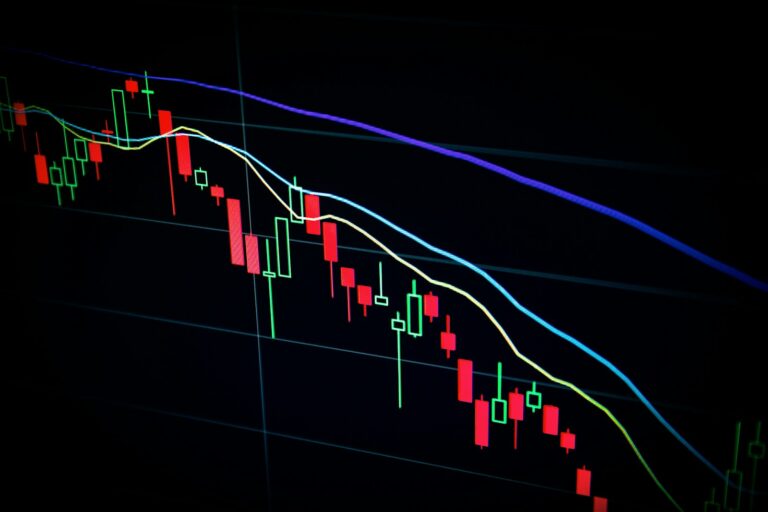
What a trend is: A trend is when an asset makes consistently higher highs and higher lows over time (uptrend) or consistently lower highs and lower lows (downtrend). When Bitcoin goes from $30,000 to $40,000 to $50,000 over several months, that is an uptrend. When it goes from $60,000 to $45,000 to $30,000, that is a downtrend.
How to identify it simply: Look at the 50-day and 200-day moving averages on a chart. When the price is above both moving averages, the trend is generally up. When the price is below both, the trend is generally down. The crossover of the 50-day moving average above the 200-day moving average is called a golden cross and is a widely watched bullish signal.
When to enter: Enter when the trend is clearly up and the price has pulled back slightly to a moving average. This gives you a better entry point than chasing prices at a peak.
When to exit: Exit when the trend breaks. If Bitcoin was making higher highs and suddenly drops below its 50-day moving average on high volume, that is a warning sign. Have a rule before you enter about when you will exit, and stick to it.
Risk profile: Medium-high. Trends reverse suddenly and with little warning in crypto. You can get caught in a fake breakout where the trend looks strong and then collapses. Stop-losses help manage this.
Simple example: Bitcoin breaks above $50,000 in January 2024 after several months of higher lows. You enter at $52,000 with a stop-loss at $46,000. Bitcoin trends to $70,000 by March. You exit and take profit. Total gain: roughly 35%.
Strategy 4: Range Trading
Difficulty: Intermediate Beginner | Risk: Medium-High
Range trading works when a crypto is not trending strongly in either direction but instead bouncing between two price levels. You buy near the bottom of the range and sell near the top.
Support and resistance explained simply: Support is a price level where buyers keep stepping in and stopping the price from falling further. Think of it as a floor. Resistance is a price level where sellers keep stepping in and stopping the price from rising further. Think of it as a ceiling. A range exists when the price keeps bouncing between a consistent floor and ceiling.
How to identify a range: Look at a chart over the past few weeks. If the price has touched the same low point two or three times and the same high point two or three times without breaking through either, you have a range. The more times it has bounced off those levels, the more reliable they are.
How to trade it: Buy when price drops near support. Sell when price rises near resistance. Set a stop-loss just below support in case the price breaks down through the floor.
Risk profile: Medium-high. Ranges break. When they do, prices can move fast and far in one direction. A range breakout can be a large loss if you are caught on the wrong side without a stop-loss.
Simple example: Ethereum has been trading between $3,000 (support) and $3,500 (resistance) for six weeks. You buy at $3,050 with a stop at $2,900. Ethereum rises to $3,450 and you sell. Gain: about 13%.
Strategy 5: Low-Leverage Futures (Advanced Beginners Only)
Difficulty: Advanced Beginner | Risk: High
Futures allow you to trade with more size than you actually have. A 2x leverage position means a 10% price move results in a 20% gain or loss on your capital. This is NOT a strategy for day one. Read this section to understand the risks before you consider it.
What leverage means in plain terms: You deposit $100 and open a $200 position with 2x leverage. If Bitcoin rises 10%, your $200 position gains $20, which is 20% on your $100 deposit. If Bitcoin drops 10%, your $200 position loses $20, also 20% on your $100. At higher leverage levels, liquidation happens fast. At 10x leverage, a 10% adverse move wipes out your entire position.
If you do use it, keep leverage at 2x or below. This limits your liquidation risk while still giving you some amplified exposure. Use it only after you have practiced HODL and DCA and have a solid understanding of how crypto markets move.
Risk clearly stated: The CFTC has warned consumers about the risks of crypto futures trading. See the CFTC consumer advisories on virtual currency before trading any leveraged crypto products. Most people who use high leverage lose money.
Best for: Beginners who have at least six months of crypto experience, understand market dynamics, and are willing to lose their entire trading capital.
Which Strategy Should You Start With?
If you are brand new to crypto, start here:
- Start with HODL or DCA. These require no technical analysis and no constant monitoring.
- After three to six months, learn to read a basic chart and try trend following on paper before risking real money.
- Range trading requires practice. Do it in a demo account first.
- Do not touch leverage until you genuinely understand how liquidation works.
You can track crypto prices and market trends for free on CoinGecko. It shows price history, trading volume, and market cap for thousands of cryptocurrencies.
Final Thoughts
The best strategy for a beginner is the one you can actually stick with. Complicated strategies sound exciting but require skill that takes time to develop. Most professional traders started with the basics and built from there.
Start simple. DCA a small amount into Bitcoin monthly. Learn how markets move by watching without trading. Gradually add more sophisticated strategies as your understanding grows. The goal is to still be in the game five years from now, not to get rich in the next three months.
Ready to get started? Explore our DCA beginner guide, check prices on our free DCA calculator, and read our Bitunix exchange review to find a platform to trade on.
This post is for informational purposes only and does not constitute financial advice. Crypto trading involves substantial risk of loss.